
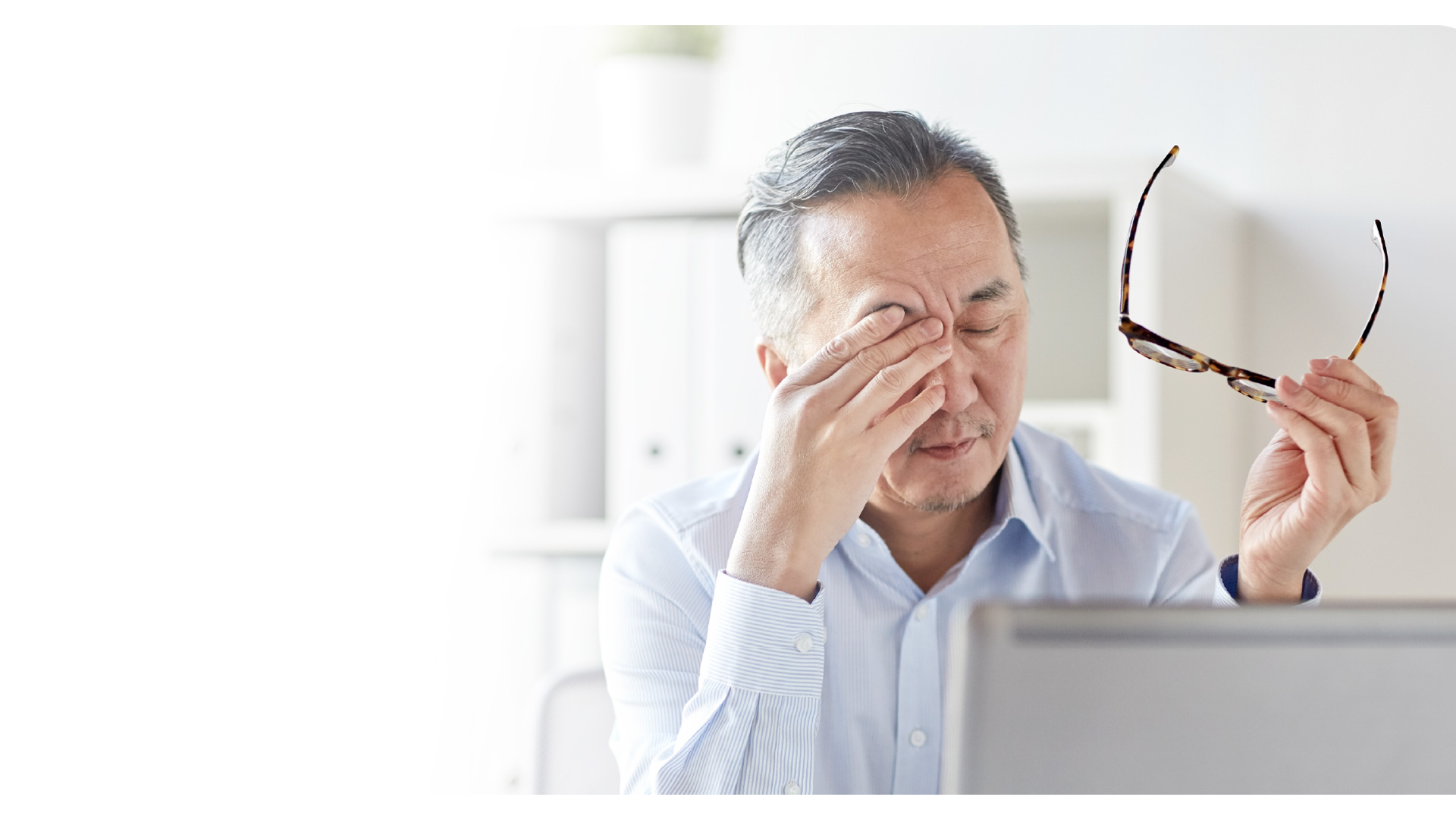
What You Should Know Before Choosing the Wrong Glasses:
The size of the text has not changed.
The lighting remains the same.
Yet your vision… is gradually changing over time.
Understanding Presbyopia
Presbyopia, or age-related farsightedness, is a natural and inevitable condition that most individuals experience at some point in life. It often becomes noticeable after the age of 40 and can be a source of concern—especially for those who have never required glasses before.
In simple terms, presbyopia is part of the natural aging process, similar to how hair gradually turns gray due to reduced pigment production. Likewise, the structures within the eye undergo age-related changes, leading to reduced visual performance.
Pathophysiology
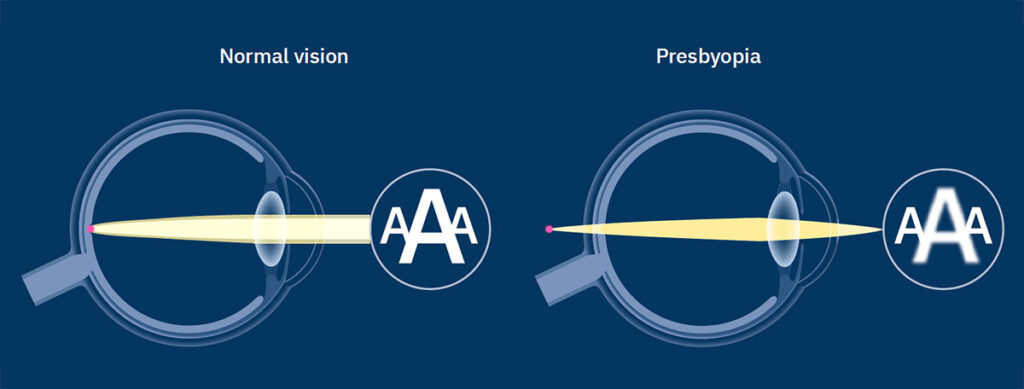
Under normal conditions, the natural lens of the eye has the ability to change shape (accommodate), allowing us to focus clearly on near objects such as books, smartphones, or computer screens.
With increasing age, the lens gradually loses its elasticity and becomes less flexible. As a result, its ability to adjust focus for near vision diminishes. This reduction in accommodative function typically begins around the age of 40 and progresses over time.
Common Early Symptoms
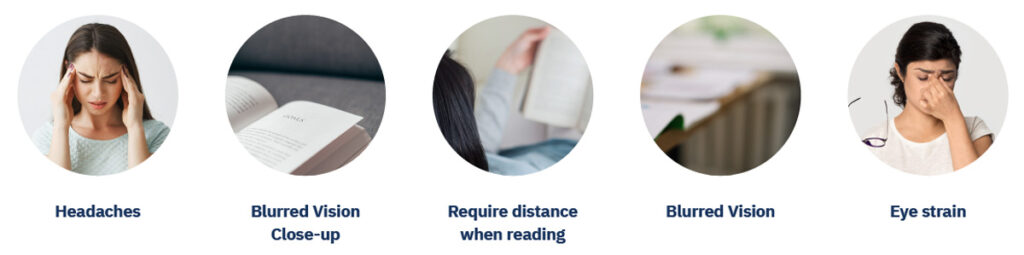
Patients with presbyopia often notice subtle visual changes, including:
- Eye strain or discomfort during near tasks
- Blurred vision when reading
- Increased effort required to focus on smartphones or small text
- Difficulty seeing fine details, such as price tags
- The need to hold reading materials farther away to achieve clearer focus
Who Is Affected?
Presbyopia affects all individuals over the age of 40, regardless of whether they previously had normal vision, myopia (nearsightedness), hyperopia, or astigmatism.
It is important to distinguish presbyopia from hyperopia (farsightedness):
- Hyperopia is related to the anatomical structure of the eye (e.g., shorter eyeball or insufficient refractive power)
- Presbyopia is caused by age-related loss of lens flexibility
Both conditions may coexist, which can make visual correction more complex.
Management of Presbyopia
Presbyopia is not a disease, but a manageable condition. With appropriate care, clear and comfortable vision can be restored.
Basic management includes:
- Regular comprehensive eye examinations (at least once a year)
- Selection of appropriate eyewear tailored to individual visual needs and lifestyle
When properly corrected, patients can regain both visual clarity and comfort in daily activities.
Clinical Challenges in Presbyopia Correction
In practice, presbyopia management is not always straightforward. It often requires careful assessment and effective communication between the eye care professional and the patient.
Common challenges include:
- First-time glasses wearers who may have difficulty adapting
- Patients with pre-existing refractive errors (myopia, hyperopia, astigmatism), leading to more complex prescriptions
- Previous unsatisfactory experiences with glasses, resulting in negative perceptions
- Use of non-prescription (ready-made) reading glasses without proper guidance
These factors highlight the importance of individualized care and patient education.
Are Ready-Made Glasses Suitable?
Over-the-counter reading glasses are widely available and convenient. However, they are not suitable for everyone.
These glasses are not customized to individual visual parameters, such as:
- Accurate refractive power for each eye
- Pupillary distance (PD)
Improper use may lead to:
- Eye strain
- Headaches or dizziness
- Poor visual comfort
- Negative first experiences with glasses
For many individuals, presbyopic correction represents their first experience with eyewear, making proper initial guidance especially important.
The Importance of Professional Eye Examination
Consultation with an eye care professional—whether an ophthalmologist or optometrist—is essential.
A comprehensive eye examination not only ensures accurate prescription glasses but also provides:
- Proper lens selection guidance
- Education on correct eyewear use
- Long-term eye health management
Conclusion
Presbyopia is a natural and unavoidable part of aging. However, with proper understanding and appropriate correction, it does not have to compromise quality of life.Good vision is not achieved by glasses alone—
but through a true understanding of your eyes.
Symptoms of Presbypia

Article by:
Anisara Khomangklang,
O.D., Nami, Optometrist, Glassisimo Eyewear Store.
References
- Dr. Usanee Rianprayoon, MD. Department of Ophthalmology, Faculty of Medicine, Chulalongkorn University.