
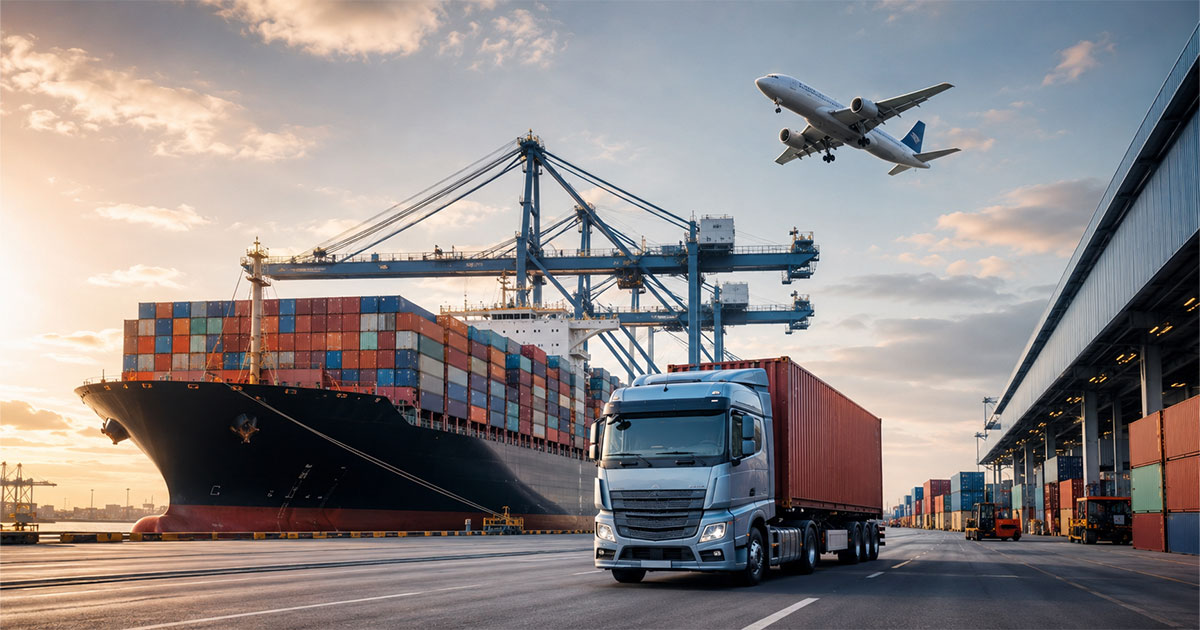
In business operations, the terms logistics and supply chain are often used together. Although they are closely related, they do not mean exactly the same thing.
For businesses involved in manufacturing, trading, import-export, distribution, or warehousing, understanding the difference between logistics and supply chain management can help improve planning, coordination, and operational efficiency.
What Is Logistics?
Logistics generally refers to the planning, movement, storage, and coordination of goods, information, and related resources from the point of origin to the point of use or delivery.
In practical terms, logistics covers activities such as:
- transportation
- storage
- inventory handling
- materials movement
- packaging
- order coordination
- delivery planning
- information flow related to operations
Logistics is not limited to transportation alone. It is a wider operational function that supports the movement of goods and resources across the business process.
What Is a Supply Chain?
A supply chain is the wider network of organizations, people, processes, and activities involved in bringing a product or service from its source to the end customer.
This network may include:
- raw material suppliers
- manufacturers
- warehouses
- transport providers
- distributors
- retailers
- end users
In other words, the supply chain is the broader system, while logistics is one of the key functions that helps the system work effectively.
A Simple Way to Understand the Difference
A simple way to understand the relationship is this:
- Supply chain is the full network and flow of activities from upstream to downstream.
- Logistics is the operational process that helps move and manage goods, materials, and information efficiently within that network.
For example, if a business produces food products, the supply chain may begin with ingredient suppliers, move to the factory, continue to warehousing and distribution, and end with retailers or final consumers.
Within that process, logistics supports the movement, storage, coordination, and timing of each step.
Why Logistics Is Important in Business
Logistics plays an important role in business because it affects both operational performance and cost control.
Effective logistics management can help businesses:
- reduce unnecessary transportation or storage costs
- improve inventory control
- support smoother production flow
- shorten lead times
- improve delivery performance
- increase overall operational visibility
When logistics is poorly managed, businesses may face delays, higher costs, stock imbalances, and service issues.
Why Supply Chain Management Matters
Supply chain management is important because business performance often depends on how well different parties work together.
A supply chain is only as strong as its weakest link. If one part of the chain faces disruption, the effects may spread across sourcing, production, warehousing, transportation, and final delivery.
For this reason, businesses should not focus only on their internal operations. They also need to consider the wider network of suppliers, service providers, and customers that influence the final outcome.
How Logistics and Supply Chain Work Together
Logistics and supply chain management are closely connected. A business may have a strong supplier network, but without efficient logistics, goods may still arrive late, cost too much to move, or fail to reach customers on time.
Likewise, good logistics alone may not solve broader supply chain issues if supplier planning, production scheduling, or distribution coordination are weak.
The most effective business operations are those that manage both:
- the wider network of the supply chain
- the execution side through logistics activities
Examples of Logistics Activities in the Supply Chain
To make the concept easier to understand, common logistics activities within the supply chain may include:
- sourcing support and inbound transportation
- raw material receiving
- storage and warehouse handling
- production support movement
- finished goods storage
- order preparation
- outbound transportation
- distribution to customers or retail channels
These activities take place at different stages, but all contribute to the ability of the business to deliver products efficiently and consistently.
Business Value of Strong Logistics and Supply Chain Management
When logistics and supply chain processes are managed effectively, businesses can achieve several important benefits, including:
- better cost efficiency
- improved service levels
- stronger coordination across departments and partners
- better responsiveness to market demand
- more reliable product flow
- stronger competitiveness
This is especially important in today’s business environment, where companies face rising customer expectations, international trade complexity, and increasing pressure to improve both speed and control.
A Practical Foundation for Business Growth
Logistics and supply chain management should not be seen as abstract concepts. They are practical business functions that directly affect day-to-day operations and long-term growth.
For manufacturers, importers, exporters, and distribution businesses, building a better understanding of logistics and supply chain fundamentals can help support better decision-making and more efficient business operations.