
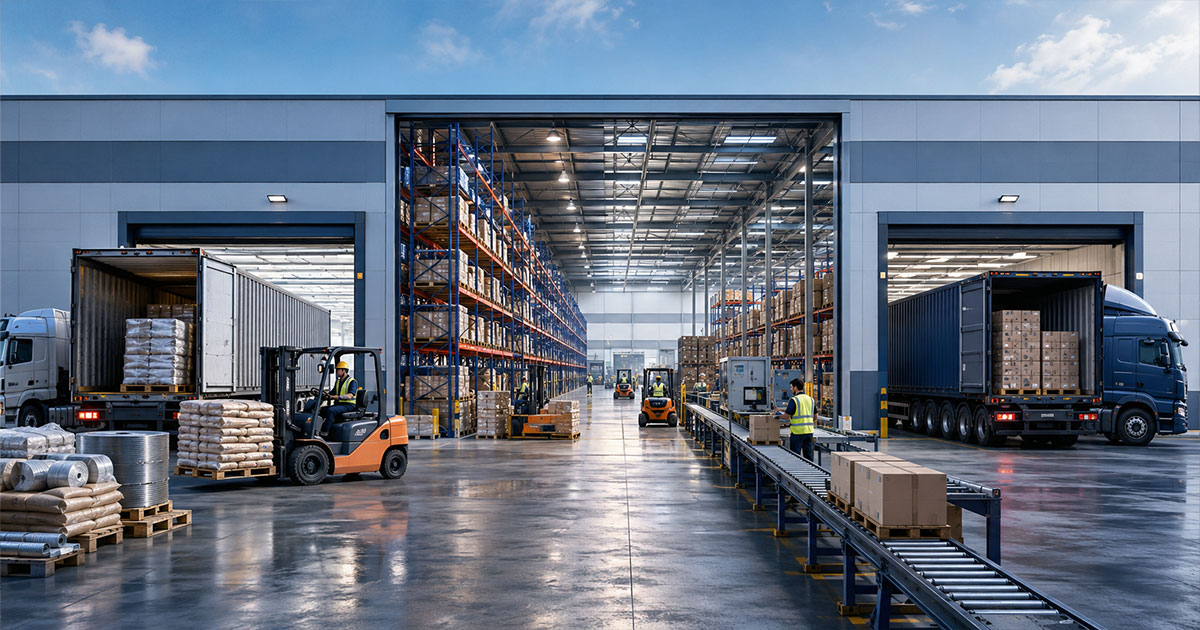
In logistics and supply chain management, the movement of goods does not begin only when products are shipped to customers. It also starts much earlier, from the sourcing of materials, production support, and inventory coordination within the supply chain.
This is why businesses often separate logistics activities into two key areas: inbound logistics and outbound logistics. Although both are part of the same supply chain, they serve different purposes and involve different operational priorities.
Understanding the difference between inbound and outbound logistics helps businesses improve efficiency, manage costs more effectively, and support better coordination across procurement, production, warehousing, and distribution.
What Is Logistics?
In a business context, logistics generally refers to the planning, movement, storage, and coordination of goods, services, information, and related resources from the point of origin to the point of use or consumption.
Logistics is closely connected to supply chain management because it supports the flow of materials, products, and operational information between suppliers, manufacturers, warehouses, distributors, and customers.
What Is Inbound Logistics?
Inbound logistics refers to the activities involved in moving materials, goods, or components from suppliers to a business, factory, warehouse, or production facility.
It focuses on the upstream side of the supply chain and is closely related to procurement and supply planning. In many businesses, inbound logistics may include:
- sourcing and supplier coordination
- transportation of raw materials or components
- receiving operations
- inventory planning for incoming materials
- storage of raw materials
- scheduling and information flow related to supply
For manufacturers, inbound logistics is especially important because disruptions in material flow can affect production schedules, inventory levels, and operating costs.
What Is Outbound Logistics?
Outbound logistics refers to the activities involved in moving finished goods from a business to customers, distributors, retailers, or end users.
It focuses on the downstream side of the supply chain and is closely related to order fulfillment and product distribution. Outbound logistics may include:
- finished goods storage
- order processing
- picking and packing
- transportation planning for deliveries
- distribution to customers or distribution centers
- delivery coordination and shipment visibility
For many businesses, outbound logistics directly affects customer experience because it is linked to delivery speed, accuracy, product availability, and service reliability.
Key Differences Between Inbound and Outbound Logistics
Although inbound and outbound logistics are both part of logistics operations, the main difference lies in the direction of flow and the business objective of each activity.
1. Direction of Movement
Inbound logistics focuses on moving goods into the business, such as raw materials, parts, or supply items from suppliers.
Outbound logistics focuses on moving goods out of the business, such as finished goods being delivered to customers, distributors, or retail channels.
2. Main Business Relationship
Inbound logistics mainly involves coordination between the business and its suppliers.
Outbound logistics mainly involves coordination between the business and its customers, distributors, or end users.
3. Operational Objective
Inbound logistics aims to ensure that the right materials arrive at the right place and time to support business operations or production.
Outbound logistics aims to ensure that finished goods are delivered accurately and efficiently to meet customer demand.
4. Inventory Focus
Inbound logistics is often associated with raw materials, production inputs, and replenishment planning.
Outbound logistics is more closely associated with finished goods inventory, order fulfillment, and distribution planning.
5. Performance Impact
Poor inbound logistics can lead to material shortages, production delays, and higher supply costs.
Poor outbound logistics can lead to delayed deliveries, order errors, lower customer satisfaction, and weaker service performance.
Why Both Matter in Supply Chain Management
Inbound and outbound logistics should not be viewed as separate issues. In practice, both are connected across the broader supply chain.
If inbound logistics is not managed well, a business may face production interruptions or excess inventory. If outbound logistics is weak, the business may struggle to deliver products on time or respond effectively to customer demand.
For this reason, businesses should evaluate both sides together, especially when reviewing:
- supplier performance
- transportation planning
- warehouse operations
- inventory management
- lead times
- order accuracy
- distribution efficiency
An effective supply chain depends on how well these logistics activities work together from source to customer.
How Businesses Can Improve Inbound and Outbound Logistics
Businesses can improve logistics performance by reviewing each stage of the flow of goods and identifying where delays, extra costs, or coordination issues occur.
Common improvement areas may include:
- better forecasting and inventory planning
- stronger supplier coordination
- improved warehouse processes
- clearer order and shipment visibility
- route and delivery planning
- better information sharing across departments and partners
In some cases, businesses may also work with a logistics partner to support transportation, warehousing, customs coordination, or cross-border shipment management as part of a broader supply chain strategy.
Inbound and Outbound Logistics as Part of Business Growth
Inbound logistics and outbound logistics are both essential to business operations. One supports the flow of goods into the business, while the other supports the movement of products out to the market.
For manufacturers, importers, exporters, and distribution businesses, improving both areas can help reduce inefficiencies, improve operational control, and support more consistent service performance across the supply chain.